A Low Twisted Bun: Build the Shape Without Pulling It Tight
A twisted bun is a coil of hair arranged around a base, not a knot that has to be wound as tightly as possible. Starting with a low ponytail separates the two jobs: the elastic supports the hair, while a few pins help the coil keep its shape. This version is intended for ordinary daytime wear. It is not a ballet bun, a competition updo or a style designed to survive vigorous exercise. Work with a manageable size and let a few ends remain visible if hiding them would require force.
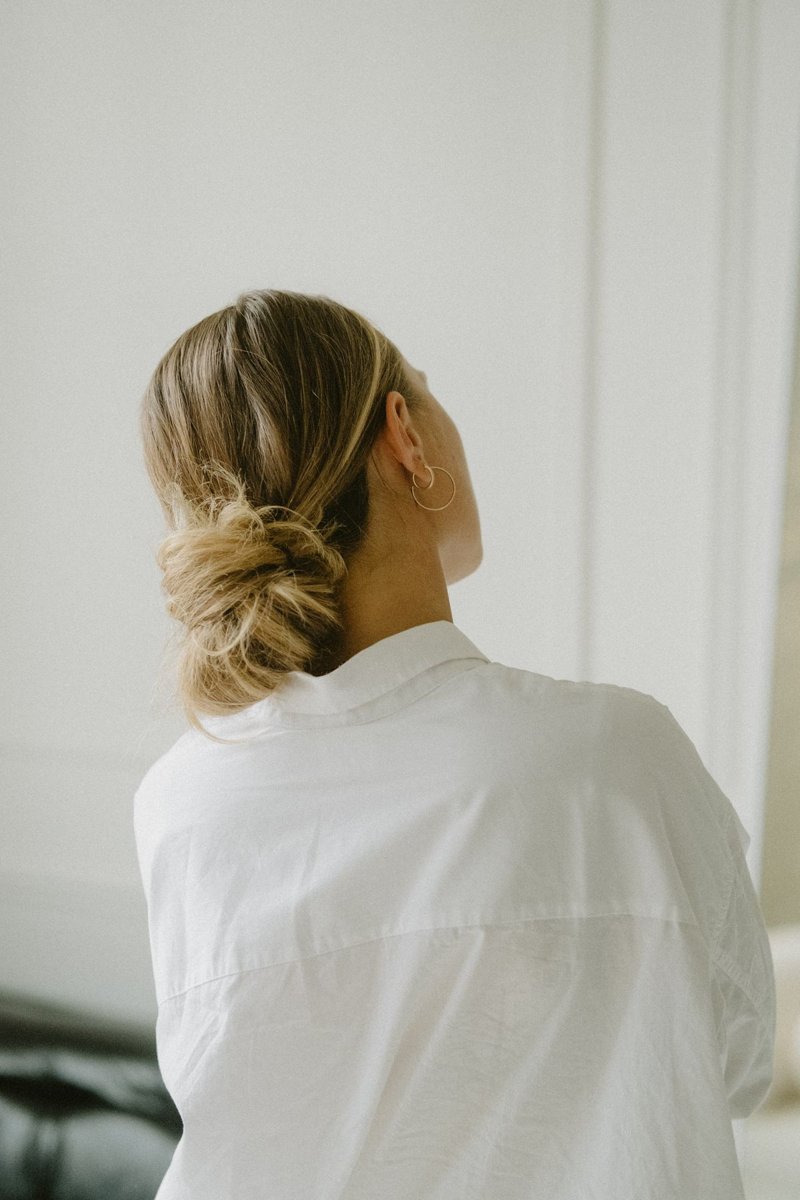
Photo: Mathilde Langevin · Photo license. Hairstyle reference photograph; follow the written steps and adapt to your length and texture. The pictured person is not an author or endorser.
Best suited to: Best starting point: medium or long hair with enough length to coil around a low ponytail base.
What you need
- A covered elastic
- Several smooth hairpins or bobby pins with intact tips
- A mirror for checking the back
Step by step
- Gather a comfortable low ponytail using the method in our ponytail guide. Place it slightly above the nape so there is room for the coil below the elastic. Check that the base is already comfortable before adding any pins.
- Hold the tail a short distance below the elastic and rotate the lengths into a loose rope. Twist the hair itself rather than turning the ponytail base against the scalp. Stop before the rope becomes rigid or starts pulling the roots.
- Bring the rope around one side of the elastic to begin a flat circle. Keep one hand lightly over the developing bun while the other guides the tail around it. Let the size of the coil follow the amount of hair you have.
- Continue around the base until only a short end remains. Tuck that end beneath an outer edge if it reaches comfortably. For shorter layers, accept a soft, visible end instead of stretching the coil to hide it.
- Add a pin at the outer edge by catching a little of the coil and a small amount of hair close to the base. Slide it into the bun without scraping the scalp. Repeat on the opposite side so the support is distributed.
- Check the top and bottom edges with a second mirror. If one side lifts away from the head, reposition the nearby pin instead of adding several more in the same spot. A pin that remains exposed can catch on clothes and should be moved.
- Move your head naturally, then loosen any uncomfortable area. Remove the pins one at a time at the end of wear, open the coil with your hands and finally release the elastic. Do not pull the entire bun free as one piece.
Match the bun to the available length
Shoulder-length hair may make only a small coil, while long hair can form a broad spiral. Both are valid. If the tail does not travel most of the way around the elastic, use a tucked ponytail or half-up twist instead of forcing this construction. Dense hair can become heavy when twisted into one rope; divide the ponytail into two loose sections, coil the first around the base, then arrange the second around it. Secure the sections independently. This can make the shape easier to manage, but it does not make an uncomfortable base acceptable.
Read the pin problem
When a bun spins as a whole, the base may be too loose or the pins may only be joining the coil to itself. Rebuild the ponytail with a suitable elastic, then connect the coil to hair near the base. When the bun feels like it contains a sharp point, remove that pin immediately and check its tip and direction. When ends pop out, try placing the end under the preceding turn of the coil before pinning. The aim is a stable arrangement with a small number of well-placed pins, not an invisible pile of hardware.
Keep the shape soft and practical
Finger arrangement works well when you want waves or curls to remain visible. A smoother outer surface is optional and does not require a tight hairline. Consider where the bun will sit against your coat, headphones or chair before choosing its height. If you need to rest your head against a surface, take the pins out first. For repeated daily wear, change the placement and occasionally choose a loose style; the AAD’s guidance on pulling hairstyles is a useful comfort reference, not an endorsement of a particular bun technique.
Your quick checklist
- The ponytail was comfortable before coiling.
- Pins have smooth tips and do not touch painfully.
- The coil stays supported during ordinary head movement.
- All pins will be removed before rest.
Common questions
Can I skip the elastic?
An experienced wearer may make a pinned coil without one, but the support and pin placement change. This tutorial uses an elastic so beginners can separate the base from the coil.
Does the twist have to go clockwise?
No. Choose either direction and coil consistently in the direction that feels natural. A mirror can make directions seem reversed, so follow the shape rather than the word clockwise.
Is this a good sleeping style?
This guide is for waking wear. Remove the pins and fastening before lying down; hard accessories can press against the head.