How to Make a Low Ponytail That Feels Comfortable
A low ponytail is useful because its structure is simple: a part, a gathered base and a loose tail. The finish can be neat without being pulled flat against the scalp. This guide starts with a soft, everyday version rather than an extremely slick look. The goal is an even silhouette that stays out of the way while your head can move freely. There is no single correct texture; straight lengths, waves, curls and coils can all make different-looking ponytails. Start with the texture you already have instead of brushing it into someone else’s result.
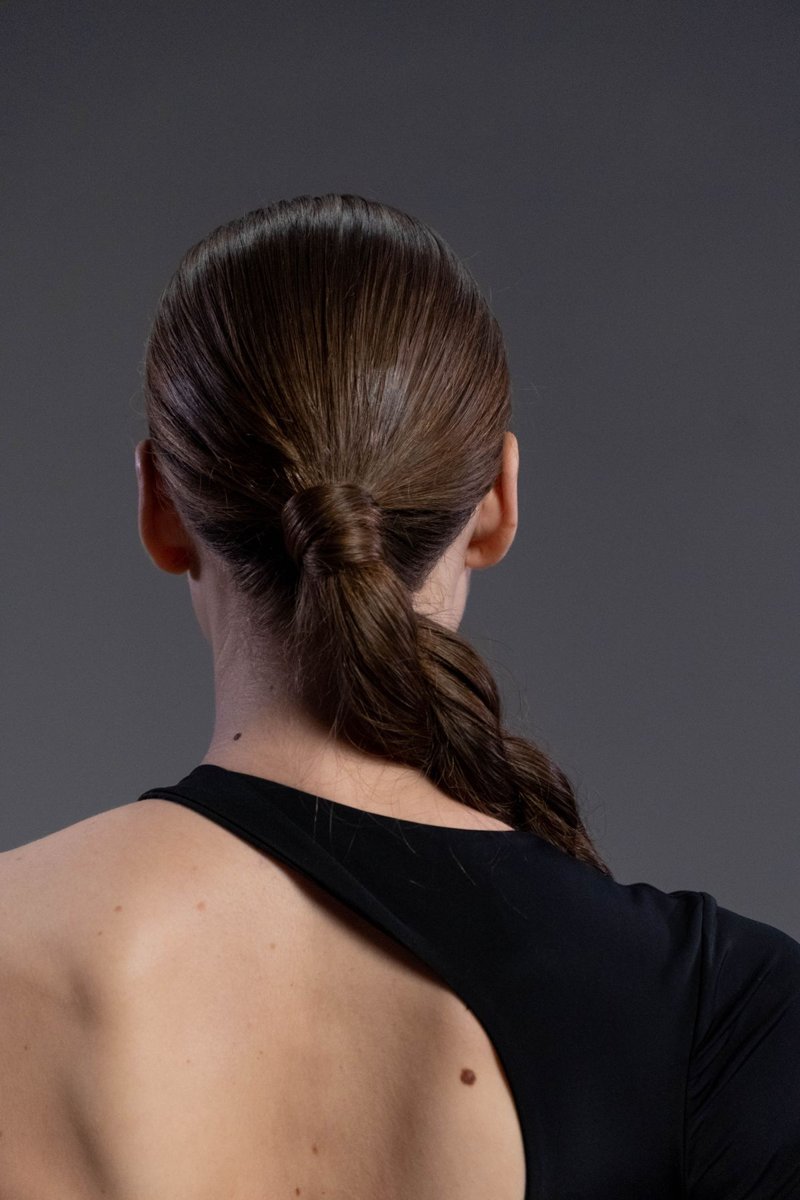
Photo: cottonbro studio · Photo license. Hairstyle reference photograph; follow the written steps and adapt to your length and texture. The pictured person is not an author or endorser.
Best suited to: Best starting point: hair long enough to gather comfortably at the nape. Short face-framing layers may stay out.
What you need
- A covered hair elastic suited to the amount of hair
- A wide-tooth comb or a brush you already use comfortably
- A hand mirror and optional small clips for short layers
Step by step
- Begin with dry hair that is ready for styling. Separate tangles using your usual gentle method, working from the ends upward. For curls or coils, arranging sections with fingers may preserve more definition than brushing the whole head.
- Choose a center part, a side part or no visible part. Make that choice before gathering the hair; changing it after fastening often creates a ridge near the crown. Leave out any fringe or short pieces you want around the face.
- Tilt your chin into a neutral position and gather the lengths with one hand just above the nape. Use the other hand to guide the side sections toward that point. Do not press the hairline backward to make the surface perfectly flat.
- Hold the base steady while checking both sides in a mirror. Smooth only the outermost layer if you want a neater finish. Keep natural volume where it suits the shape rather than flattening the entire crown.
- Pass the tail through the elastic, then loop the elastic again only if the base still needs support. The necessary number of loops depends on the elastic and hair density. It should hold without pinching or tugging at the temples.
- Set the tail down and move your head left, right and gently downward. If the base pulls when you look down, remove the elastic and gather the hair slightly lower or with more slack. Rebuilding is easier than trying to stretch a tight finished style.
- Finish by arranging the tail with your fingers and securing an escaping layer only if you want to. At removal, unwrap the elastic or ease it off in small movements while supporting the hair; avoid dragging it through a knot.
Adjust the base for your hair
Fine or very smooth hair may slip from a large, loose elastic. A smaller covered elastic can hold more effectively without extra tension. Dense hair needs an elastic with room to expand; a fastening that barely reaches around the bundle is a poor match. For pronounced curls, decide whether you want a compact gathered base or visible volume at the roots, and gather accordingly. Neither finish needs the hairline scraped back. If your shortest layers cannot reach the nape, leave them loose or use a small clip rather than pulling the whole ponytail upward.
Fix bumps without starting a tugging cycle
A small bump is often a section caught at a different angle. Release the elastic, separate that section and guide it back along the same direction as the neighboring hair. Tightening the finished tail by splitting and yanking it apart can shift the base and increase pulling. For a lopsided tail, check where your gathering hand was placed: the tie follows your hand, not the center of the mirror. Use the center of the nape as a reference, then check the back with a second mirror.
Choose a repeatable finish
For a desk day, keep the base low enough to avoid a chair back pushing into it. For an event, a deliberate part and a tidy elastic can give the same basic style a more considered finish. You do not need a hidden fastening or a strand wrapped around it. Check the style again after putting on a collar or jacket, since fabric can lift the underside. The American Academy of Dermatology advises avoiding repeated pulling from tight hairstyles; discomfort is a reason to loosen or remove the style, not to add more hold.
Your quick checklist
- The elastic holds without pulling at the hairline.
- Looking down does not make the base feel tight.
- Short layers are left out or secured gently.
- The tail can be released without dragging the elastic.
Common questions
Can I do this on a layered bob?
Only if enough hair reaches the nape without force. A half-up style or a side pin is usually more straightforward when the back is too short for an elastic.
Should every flyaway be smoothed down?
No. A few short hairs are normal and do not mean the style has failed. Decide whether the overall outline looks intentional, rather than trying to fasten every strand.
Why does the elastic slide down?
It may be too large, too worn or holding a bundle smaller than it was designed for. Try a suitable covered elastic and rebuild the base before increasing tension.