A Free-Hanging Rope Braid: Twist Each Section One Way and Wrap the Other
A rope-style braid uses two sections and two directions. Twisting the individual sections one way and wrapping them together the other helps create the visible rope pattern. Keep it free-hanging and comfortable rather than pulling it tightly against the scalp.
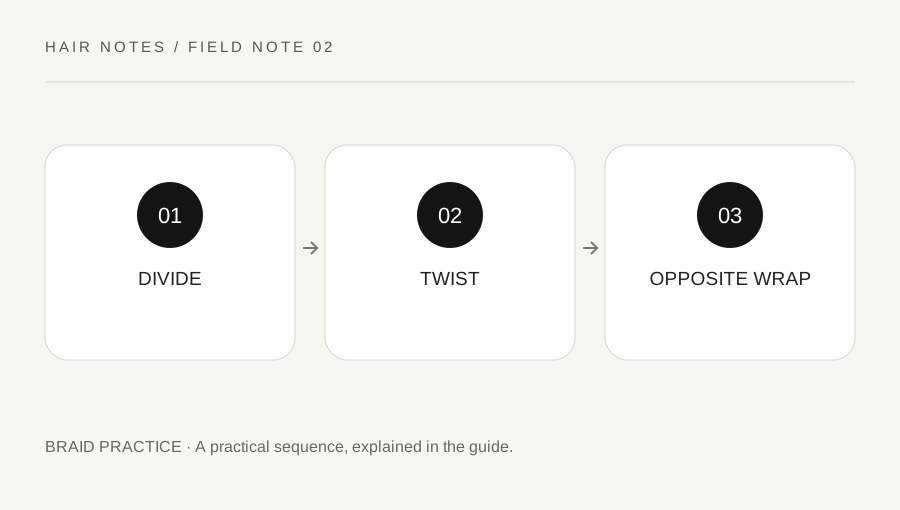
Original explanatory diagram. Examples illustrate a method or decision; they are not claims of personal testing.
Set up two manageable sections
Gently prepare the length using a method suitable for your hair and divide it into two sections. Work where you can see your hands. A side position can help if it is comfortable. Keep the base loose and avoid forcing shorter hair into the sections.
This guide describes a simple hanging style, not a tight scalp twist or a bun. If the hair tangles, stop and release the sections rather than adding more rotation. Have a suitable tie ready so the finished length can be secured without a rushed grip change.
Choose directions explicitly
For a practice convention, twist each individual section to the right, then wrap the two sections around one another to the left. You can reverse both directions, but keep their relationship opposite. Name the directions aloud or write them in a note if that helps.
The important distinction is individual-section twist versus combined wrap. Doing both in the same direction can produce a different, less stable result. Do not respond by twisting harder at the roots. Reset the pair and check the directional relationship first.
Build the pattern gradually
Add a modest twist to each section, wrap them together in the opposite direction and continue down the workable length. Keep your hands close enough to control the current section without pulling the entire style taut. Avoid winding so tightly that the sections kink or feel uncomfortable.
Hair texture, layers and length affect the visible result. This method is a practice sequence, not a promise of a perfectly smooth rope. If maintaining the pattern requires painful tension, undo it and choose another arrangement.
Secure and check the base
Stop while enough ends remain for a comfortable fastening. Use a suitable tie without excessive wrapping. Check the roots, the tie and any loose pieces. A style can be secure enough for ordinary wear without pulling every short hair into place.
Move your head normally and consider the day's clothing and accessories. Do not wear a loose hanging style where an activity or workplace requires another arrangement. Safety-specific requirements take priority over the desired outline.
Use a short direction test
Before making the whole braid, practice two or three wrap steps and release them. Check whether you can identify the rightward individual twists and leftward combined wrap in your chosen convention. This makes a directional mistake easier to correct than reworking a long tightly twisted length.
Remove the finished style by taking off the tie and reversing the wrap gently. Do not drag a brush through the intact rope. For persistent scalp or hair-loss concerns, use appropriate professional advice. These are original styling instructions without a claim of clinical benefit or a universal result across hair types.
Write individual twist and combined wrap on separate lines in a practice note. In the stated convention, the first line says right and the second says left. If the result unravels quickly, check whether those actions were accidentally performed in the same direction before changing tension. You can practice the directional idea on a suitable separate model rather than repeatedly handling your hair. Do not attach improvised cords or objects to the scalp. The aim is understanding two different rotations, then applying an appropriate gentle method to a manageable section. Record the convention so a later attempt starts from the same clear relationship.
A practical checklist
Choices are saved in this browser. Reset them here or clear this site’s browser storage.
Questions that come up
Can I reverse the stated directions?
Yes. Reverse both while keeping individual twist and combined wrap opposite. The relationship matters more than choosing right as the starting direction.
Should the rope feel very tight?
No. Keep it comfortable and free-hanging. Pain or pulling is a reason to undo or loosen the style, not a sign of successful technique.
Can I brush it out while still wrapped?
Remove the tie and reverse the wrap gently first. Do not force a brush through the intact structure or a knot.
References & scope
Background references checked on 18 October 2026. Worked examples and diagrams are original teaching material.