Two Loose Low Braids: Divide the Hair Before Repeating the Braid Sequence
Two low braids begin with a clear left-right division and a comfortable base on each side. The style uses a familiar three-strand sequence twice. Focus on manageable sections and gentle fastening rather than pulling the part or edges into exact symmetry.
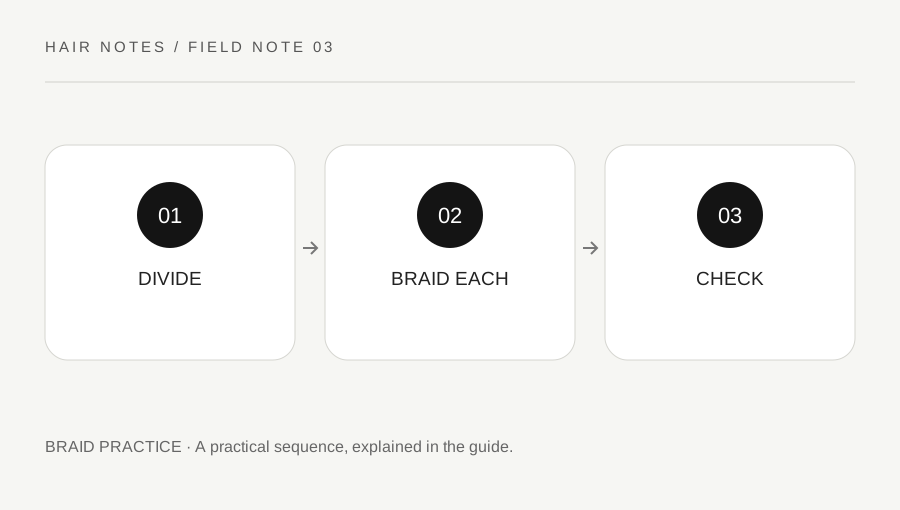
Original explanatory diagram. Examples illustrate a method or decision; they are not claims of personal testing.
Choose a practical division
Part the hair into two broad sides using a suitable gentle method. A centre division is one option, but exact geometric symmetry is not required. Keep the working area visible and clip the unused side gently with an appropriate sectioning clip.
Do not scrape a part into a sensitive scalp or repeatedly pull short edge hairs to sharpen the line. If a style causes pain or traction, undo it. Use hair that reaches the low working position comfortably; shorter pieces can remain loose when appropriate for the setting.
Make the first low braid
Divide the first side's length into three manageable strands. Cross one outside strand over the middle, then the opposite outside strand over the new middle. Repeat the familiar alternating sequence down the usable length.
Keep the braid free-hanging rather than drawing each crossing tightly against the scalp. Work at a comfortable hand position and pause if the strands become confused. A first braid does not need to be exceptionally fine or tight to establish the sequence.
Repeat without forcing a mirror image
Secure the first braid with a suitable tie, release the second side and divide it into three strands. Repeat the sequence at a comparable comfortable height. Hair density, layers and natural fall can make the two sides look different.
Compare their overall placement without pulling one side tighter merely to copy the other. If one braid begins too high or feels uncomfortable, redo that side gently. Avoid repeatedly tightening both ties in an attempt to erase every visible difference.
Check fastening and ordinary movement
Use ties that hold the ends without excessive force and leave enough length to avoid repeated slipping. Check that sectioning clips have been removed. Move your head normally and confirm that the base of each braid remains comfortable.
Consider clothing collars, bag straps and the day's activity. A hanging braid may need another arrangement under specific equipment or workplace rules. This styling guide does not override those requirements or promise that the same placement suits every person.
Review and remove systematically
For a worked practice, complete a short braid on each side and compare the strand sequence before finishing the full length. Note whether the difficulty was the division, the hand change or the fastening. Practice that part rather than tightening the entire style.
To remove, take off one tie and reverse crossings gently before moving to the other side. Use an appropriate detangling method where needed without forcing resistance. Persistent scalp irritation or hair-loss concerns require appropriate professional advice, while an uneven first braid can simply remain a learning observation.
Before beginning the second side, note the comfortable starting height of the first braid and check that its temporary sectioning clip has been removed. Compare placement rather than measuring every crossing. If the second hand position is unfamiliar, practice a short sequence and pause to identify the new middle strand after each crossing. A mistake in strand order is corrected by undoing a few crossings, not by pulling the whole braid tight. Keep the two end ties easy to identify for removal. This small routine makes the style easier to repeat without demanding identical density, length or natural fall on both sides.
A practical checklist
Choices are saved in this browser. Reset them here or clear this site’s browser storage.
Questions that come up
Must the part be perfectly central?
No. Choose a comfortable division suited to the desired style. Exact symmetry is not necessary and should not be created with painful pulling.
Why do the braids look different?
Density, layers, natural fall and hand control can differ. Check comfort and sequence before chasing a mirrored appearance.
Should I tighten one side to match?
Redo an uncomfortable or misplaced section gently instead. Do not increase traction merely to make both sides look identical.
References & scope
Background references checked on 18 October 2026. Worked examples and diagrams are original teaching material.