Take Down a Hairstyle in Reverse Order Before Detangling
Removing a style is easier when you know which pins, ties and wraps hold it. Release the fastenings and reverse the structure before trying to detangle the loose hair. A rushed pull can turn a simple takedown into a stubborn snag.
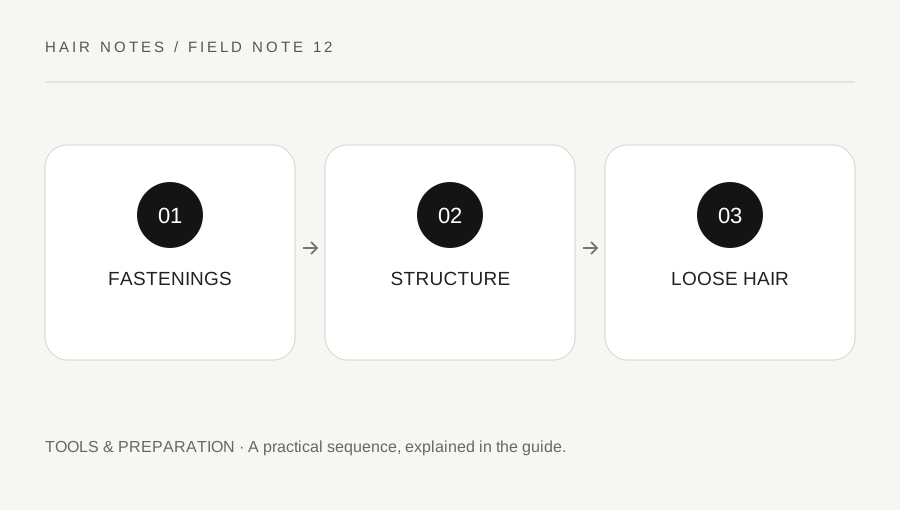
Original explanatory diagram. Examples illustrate a method or decision; they are not claims of personal testing.
Identify what is holding the style
Look for visible pins, clips, ties and wrapped ends. If you created the style, use your memory or a simple accessory count. If another person styled it, ask how it was secured where practical. Do not assume every hidden object is the same kind of pin.
Choose a comfortable position with useful light and keep a container for removed accessories. Avoid working while rushed or twisting the head into an awkward position to inspect the back. A second mirror or suitable assistance can make an unfamiliar arrangement easier to understand.
Remove the outer fastenings gently
Open clips and clasps fully using their normal mechanism. Support the hair and release pins without forcing their tips through a resistant section. Put each removed tool aside so it is not caught again in the loosened hair.
For ties, loosen and release passes where practical rather than dragging a tight fastening through a whole length. Do not cut close to the scalp or hair as a shortcut. If a fastening is seriously tangled, pause and seek appropriate help instead of increasing force.
Reverse the structure
Unwrap a bun or rope gradually and undo braid crossings in reverse order. Keep the rest of the hair supported while working on a small area. An intact braid should not be treated as a knot to brush through.
If a section resists, inspect whether another hidden fastening or crossed strand remains. Releasing that cause is different from pulling harder. Allow the hair to return to a loose state before deciding what detangling method is appropriate for its type and condition.
Use suitable gentle detangling
Follow care guidance suited to your hair rather than assuming one wet or dry method works for everyone. Work gently and stop at resistance. Do not repeatedly scrape the scalp or pull through a snag to finish faster.
If pain, persistent irritation or hair-loss concerns are present, obtain appropriate professional advice. This guide does not diagnose the cause or prescribe a treatment. The takedown sequence is a practical handling method, not a promise that every style can be removed without assistance.
Review a simple removal example
For a half-up loop secured with a tie and two pins, remove the pins first, then release the tie and separate the loop. Check the hair left down for accidental catches. Only then use the suitable loose-hair care method.
For a braid, remove the end tie and reverse the crossings before detangling. Note which fastening was difficult so the next style can use a more manageable arrangement. A useful styling plan includes its removal, with actual observations recorded honestly instead of assuming that a secure-looking finish is the only measure of success.
Prepare a removal order before an elaborate style is worn if its fastenings would otherwise be difficult to identify. Write clips or outer pins first, then ties and wraps as appropriate to that actual method. The order depends on the structure, so do not pull one component merely because it appears first in a generic checklist. Place removed accessories in a separate container and compare the count. If an unfamiliar snag remains, improve the view or obtain suitable help. The successful takedown leaves loose hair ready for its appropriate care method rather than a pile of partly opened fastenings tangled together.
A practical checklist
Choices are saved in this browser. Reset them here or clear this site’s browser storage.
Questions that come up
Can I brush through an intact braid to remove it?
Undo the crossings first. Forcing a brush through the structure can create unnecessary resistance and tangling.
What if I cannot identify a hidden fastening?
Pause and use suitable assistance or clearer viewing rather than pulling blindly.
Does the same detangling method suit every hair type?
No. Use appropriate care guidance for the actual hair and condition. This article does not prescribe one universal wet-or-dry routine.
References & scope
Background references checked on 18 October 2026. Worked examples and diagrams are original teaching material.