Section Hair Before Styling: Keep Working and Resting Areas Separate
Simple sectioning can make a braid or partial updo easier to follow. Separate only the areas the style needs and keep unused hair out of the way with suitable gentle clips. A clear map is more useful than many tight divisions.
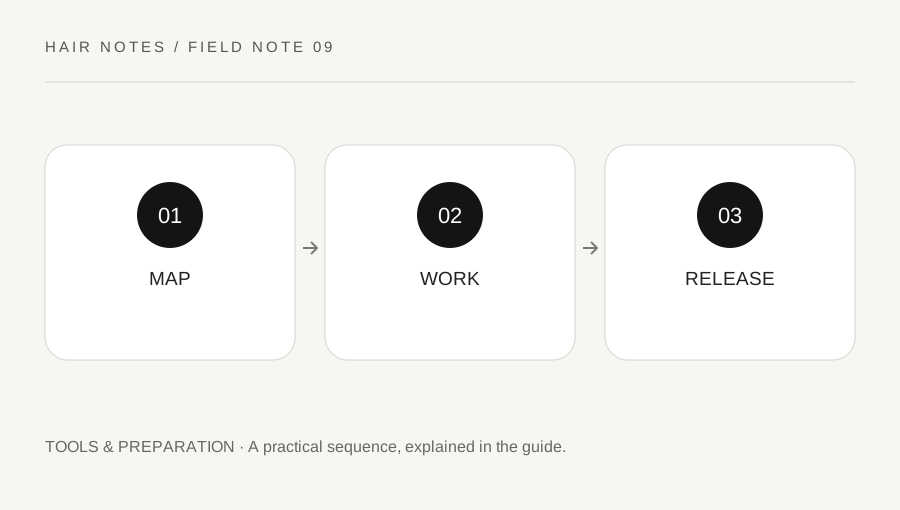
Original explanatory diagram. Examples illustrate a method or decision; they are not claims of personal testing.
Read the style before dividing
Identify how many main areas the method uses and where they sit. A two-sided braid plan, an upper half-up section and one small front detail need different maps. Do not create a complicated grid simply because a tutorial image shows many clips.
Use a suitable preparation method for the hair and stop at resistance rather than combing forcefully. Keep tools within reach and choose a position where you can see your hands comfortably. The preparation should make the style easier, not exhaust the arms before the actual sequence begins.
Separate broad areas first
Create the main division gently, following the method's intended placement and the hair's practical reach. Hold or clip the resting area without dragging the roots. Exact geometric symmetry is often unnecessary for an ordinary loose style.
Check the boundary by looking for strands accidentally crossing into the working area. Release and correct a small catch rather than pulling it taut. Keep clips suitable for the amount of hair and avoid closing a mechanism on more than it can hold normally.
Work one area at a time
Complete or practice the current section before releasing the next. If the method needs a temporary fastening, make it comfortable and easy to identify later. Do not leave hidden clips or ties in the resting hair without a plan for removal.
Pause if the sections become confused. Re-establish the main map rather than tightening the existing structure to keep everything together. A clear reset can save more effort than continuing with an uncertain division.
Use a two-sided example
For two loose low braids, divide into left and right areas, clip one gently and practice the other. After securing the first braid comfortably, release the second side and repeat. The sectioning map supports the sequence without prescribing a perfectly central part.
For a half-up style, the map instead separates an upper working section from the lower hair. These are different uses of the same organization skill. Choose only the divisions needed for the actual style, and allow shorter pieces to remain loose where appropriate.
Release and audit at the end
Remove resting-area clips and check for accidental catches before calling the style complete. Move normally and inspect the roots and fastenings for pulling. Undo or loosen an uncomfortable arrangement rather than expecting it to become acceptable with wear.
Record which broad division helped and where confusion occurred during a real practice. These original instructions do not make a medical protection claim. Persistent scalp or hair-loss concerns need suitable professional advice, while an imperfect section map can simply be revised for the next gentle attempt.
Name the broad areas in a note, such as left working and right resting, or upper working and lower loose. Count the temporary clips and cross them off when removed. If a tutorial changes viewpoint, keep your own left-right reference clear instead of copying a mirrored screen blindly. Pause at that transition and identify the actual section in your hands. This small map is especially useful when learning a new sequence, but it should not become a reason for many extra tight divisions. A simple accurate section plan can make both styling and takedown easier to understand.
A practical checklist
Choices are saved in this browser. Reset them here or clear this site’s browser storage.
Questions that come up
Do more sections always make styling easier?
No. Use the divisions the method needs. Extra clips and tight boundaries can create more confusion and handling.
Must every part be geometrically exact?
Not for these ordinary loose practice styles. Keep placement comfortable and clear without forcing symmetry.
What if hair crosses into another area?
Release the small catch gently and restore the division. Do not pull it tight to hide the mistake.
References & scope
Background references checked on 18 October 2026. Worked examples and diagrams are original teaching material.