Bobby Pins, Open Hairpins and Barrettes: Identify the Mechanism Before Using It
Different hair accessories hold through different shapes and mechanisms. Identify the actual tool and its intended use before trying to force it through a section. This guide compares ordinary accessory types and does not replace the maker’s instructions.
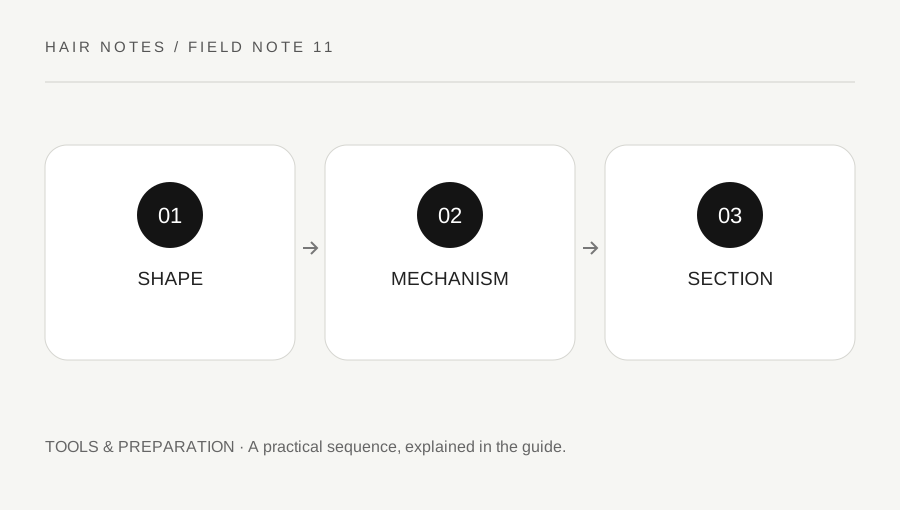
Original explanatory diagram. Examples illustrate a method or decision; they are not claims of personal testing.
Look at the tool without hair first
Inspect its tips, coating, spring or clasp and check for damage. A bobby pin's closed tension, an open hairpin's shape and a barrette's clasp are not the same mechanism. Decorative tops can conceal a smaller working area beneath.
Open or move the accessory only as its design permits. Do not bend an unfamiliar tool sharply to imitate another type. Rough edges, exposed damaged tips or a faulty clasp are reasons to choose a sound accessory rather than use it against the scalp.
Match the tool to a manageable task
A small surface section, a loose loop and a broader clasped section can need different tools. Use a method designed for the actual accessory and amount of hair. The fact that a pin enters a thick bundle does not establish a comfortable secure hold.
Avoid pressing tips into the scalp or forcing resistance. If the method is unclear, practice with suitable instruction or choose a simpler fastening. Do not add many more pins merely to compensate for an unsuitable section or damaged tool.
Keep direction instructions specific
Follow the intended method for the particular accessory. Advice about the ridged side of one bobby-pin design is not a universal rule for every open pin or decorative clip. Look at the actual shape and instructions rather than applying one remembered tip to all tools.
Check how the accessory sits after placement and whether it presses when you move or sit. A hidden tool still needs to be comfortable and accounted for. A photograph showing no visible pin is not proof of an appropriate fastening.
Compare two appropriate options
For a small loose side section, compare a suitable bobby pin method with a suitable small barrette, without pulling the section tight. Observe placement, comfort and removal. The barrette may be more visible while the pin has another outline; neither is automatically superior.
Keep the actual activity in mind. Some settings require another form of hair securement. A decorative accessory should not interfere with required equipment or create a snagging arrangement.
Remove and store systematically
Count or note accessories during a more involved style and remove them before releasing the structure in a way that could drag them through hair. Open clasps fully and release pins gently. Store sound tools separately from damaged ones.
For a worked practice, identify one accessory's mechanism, use it on a modest appropriate section and explain how it is removed. These original tool observations support styling clarity without claiming a guaranteed hold, a universal technique or a medical benefit.
Create a small accessory card with a simple written description of each tool's mechanism and how it opens or releases. Include the maker's instructions where supplied. Do not label every slim metal accessory a bobby pin, because an open hairpin and a clasping barrette need different handling. For a more involved style, keep the number used in the note and check the count during removal. If one is missing, inspect gently rather than brushing blindly through the structure. This organization supports a practical style without implying that a greater number of hidden tools automatically produces a better result.
A practical checklist
Choices are saved in this browser. Reset them here or clear this site’s browser storage.
Questions that come up
Can one pin-direction tip apply to every accessory?
No. Tool shapes and mechanisms differ. Follow the actual design and intended method.
Should I add more pins if the style is unstable?
Check section size, method and tool suitability first. More hardware does not necessarily solve the underlying mismatch.
Does a hidden pin prove a better style?
No. Comfort, suitability and manageable removal matter more than concealing every accessory.
References & scope
Background references checked on 18 October 2026. Worked examples and diagrams are original teaching material.