A Loose Bubble Ponytail: Space the Ties Before Shaping the Sections
A bubble ponytail uses several gentle ties along a gathered length, with small adjustments between them. Its shape depends on available length and comfortable fastening. Do not pull at the scalp or tighten each section to force a uniform bubble size.
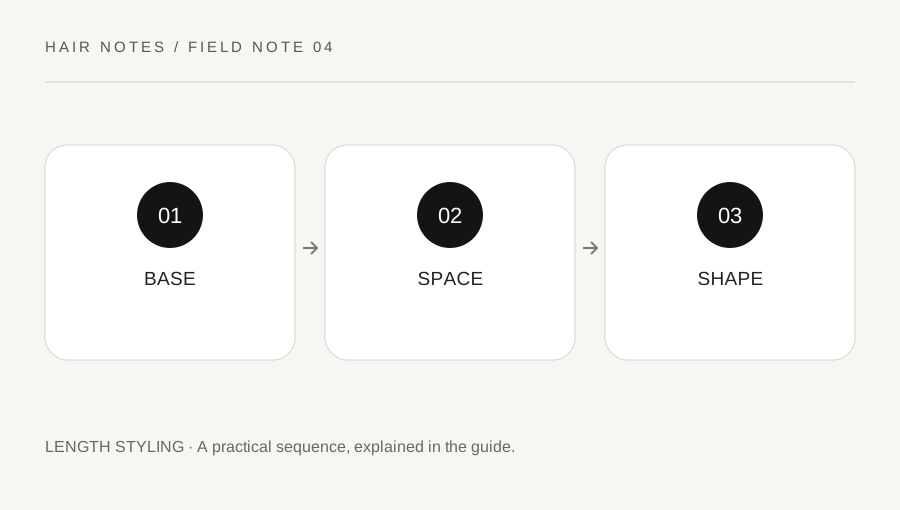
Original explanatory diagram. Examples illustrate a method or decision; they are not claims of personal testing.
Choose a comfortable gathered base
Gather the hair where it reaches naturally and secure it with a suitable tie. A low or moderate placement can be easier to inspect than a high one, but use a position that feels comfortable for you. Do not pull short pieces tightly into the base.
Prepare the length with an appropriate gentle method and keep extra ties within reach. The number of sections depends on usable length. Two manageable sections are enough for practice; the style does not require a long chain or extensions.
Place the next tie deliberately
Add another suitable tie farther down the length, leaving a section you can adjust gently. Check that the tie holds without excessive wrapping. Repeat only while enough length remains for comfortable handling.
Spacing can be similar or deliberately varied. Avoid measuring against a rigid rule that makes you pull the hair taut. The ties create the basic structure before shaping. If a tie slips repeatedly, review its suitability and the section length rather than tightening the root base.
Shape one section at a time
Support the hair near a section and make small gentle outward adjustments where it moves freely. Work around the section rather than pulling one large strand sharply. Stop if there is resistance or discomfort. A subtle rounded shape can be enough.
Layers and texture can create different results. Do not expect each section to look identical or use force to hide escaping ends. You can keep a less expanded version if that feels more manageable. The style is an outline experiment, not a test of how much tension the hair can tolerate.
Check the whole length
Look at the base, intermediate ties and ends. Move normally and check whether the style catches on clothing or accessories. Do not add decorative hardware with unknown weight or attachment simply to cover a tie.
Use a different arrangement when the activity or workplace requires hair to be secured another way. A hanging bubble ponytail is not protective equipment and should not interfere with helmets or machinery. Keep comfort and actual requirements ahead of a photograph's shape.
Practice and remove gently
For a worked trial, make only one section between two ties and compare it before and after a small adjustment. Note the available length and tie behavior. If it is comfortable, decide whether another section is useful.
Remove ties one at a time without dragging them through shaped sections. Release the structure and use suitable gentle detangling where needed. Persistent scalp or hair-loss concerns need appropriate professional advice. These original steps do not claim the style prevents damage or produces the same finish on every hair type.
Count the ties before shaping. A base tie plus two additional ties creates two intervening sections, not three. This simple map helps you remove the style systematically later. Compare one section's outline before adjusting the next, supporting nearby hair so the change does not pull at the base. If a tie has become difficult to access, stop and release the arrangement rather than adding more decoration over it. Keep the section count suited to your length and the day's activity. The practical note should state ties used, sections formed and comfortable removal, rather than only the final photographed shape.
A practical checklist
Choices are saved in this browser. Reset them here or clear this site’s browser storage.
Questions that come up
How many bubbles should I make?
Use only the number supported by comfortable usable length. One practice section is enough to learn the method; more is optional.
Can I pull hard to make larger bubbles?
No. Adjust only where the hair moves freely and stop if it pulls or hurts. A subtler shape is a valid result.
Will every section look identical?
Not necessarily. Layers, texture and length affect the outline. Do not force symmetry through extra tension.
References & scope
Background references checked on 18 October 2026. Worked examples and diagrams are original teaching material.