Choose and Remove a Hair Tie Without Treating Maximum Tightness as the Goal
A useful tie holds a suitable section comfortably and can be removed without dragging. Size, construction and the actual amount of hair matter. Compare the tie’s behavior during ordinary wear rather than assuming a material label guarantees a universal result.
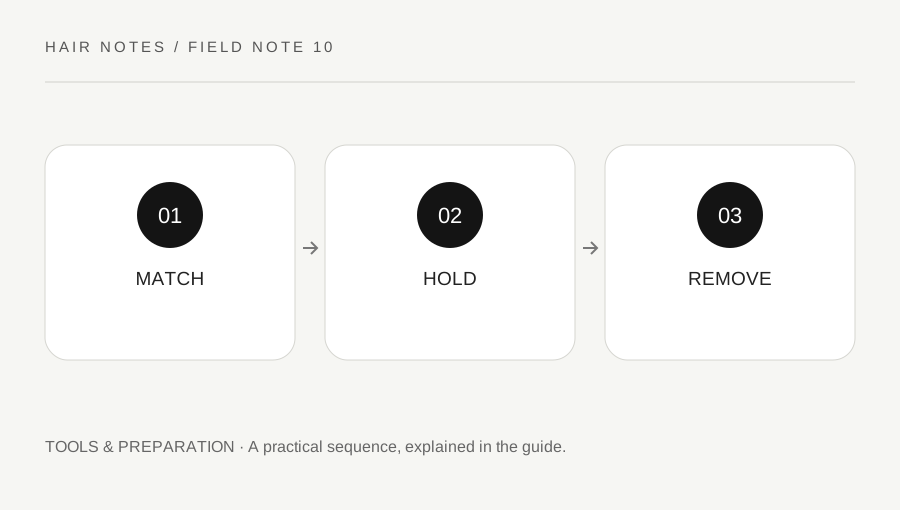
Original explanatory diagram. Examples illustrate a method or decision; they are not claims of personal testing.
Inspect the tie and section
Check for rough edges, exposed damaged parts or a stretched-out construction. Choose a tie appropriate to the amount of hair and the style. A small upper section and a large gathered length may need different fastenings.
Do not use a tie with a broken or sharp component near the hair or scalp. A familiar accessory can wear out, and an old label does not describe its present condition. Keep suitable replacements available rather than compensating for damage by wrapping more tightly.
Use only the tension needed for the arrangement
Gather the section where it reaches comfortably and apply the tie without repeatedly pulling the hair through under strain. There is no universal number of wraps because tie size, construction and hair amount differ.
If the tie slips, reconsider the section, placement or accessory rather than making the roots painfully tight. If it compresses the section uncomfortably, use another suitable arrangement. A secure style should not rely on ignoring pain or scalp pulling.
Check ordinary use
Move the head normally and notice whether the fastening presses, snags or needs constant correction. Consider clothing collars and any activity-specific requirements. A tie that works for a short practice may behave differently during a full day.
Do not infer clinical protection from words such as soft or gentle on packaging. They can describe a product intention without guaranteeing a result for every person. Persistent scalp irritation, breakage or hair-loss concerns need appropriate professional assessment rather than only another accessory experiment.
Remove the tie deliberately
Support the gathered section, loosen the fastening in the way its construction permits and release one pass at a time where practical. Do not drag a tight tie down the whole length if it catches. Pause and free trapped strands gently.
For a delicate style with several ties, remove them systematically and release the structure before detangling. Avoid cutting a tie close to the hair or scalp as an improvised shortcut. If removal is seriously tangled or uncertain, seek appropriate assistance instead of using force.
Keep a useful accessory note
For a worked comparison, try two suitable ties on the same manageable section without making it tight. Note hold, comfort and removal separately. A tie that holds strongly but snags during removal may not be the useful option you want.
Keep the outcome specific to the tie, section and setting rather than declaring one design best for every hair type. These are original practical checks, not a treatment programme or a guarantee that a particular fabric prevents damage.
Separate the comparison into hold, comfort and removal. An accessory can score differently across those practical observations, so do not choose only the strongest grip. Use the same manageable section where appropriate and note any construction difference between the ties. If one is worn out, that is not a fair comparison with a sound example of another design. Keep damaged accessories separate from ready-to-use ones. After a real day, update the note with whether the tie remained comfortable rather than assuming the initial mirror check predicted every later condition. A useful choice remains specific to the actual item and use.
A practical checklist
Choices are saved in this browser. Reset them here or clear this site’s browser storage.
Questions that come up
How many wraps should every tie use?
There is no universal number. Tie size, construction and hair amount differ. Choose a comfortable suitable hold rather than maximum tightness.
Does a soft material guarantee no damage?
No universal guarantee follows from a label. Observe actual comfort and removal, and use appropriate advice for persistent concerns.
Should I drag the tie down to save time?
Not if it catches. Support the hair, loosen the fastening and free strands gently before removing it.
References & scope
Background references checked on 18 October 2026. Worked examples and diagrams are original teaching material.