Try a Different Hair Part Without Heat or a Rigid Face-Shape Rule
Changing a part can alter where the hair falls without requiring a cut or heated tool. Compare a centre, off-centre or side placement using a gentle method suited to your hair. Keep natural growth patterns and comfort in view rather than forcing a precise line.
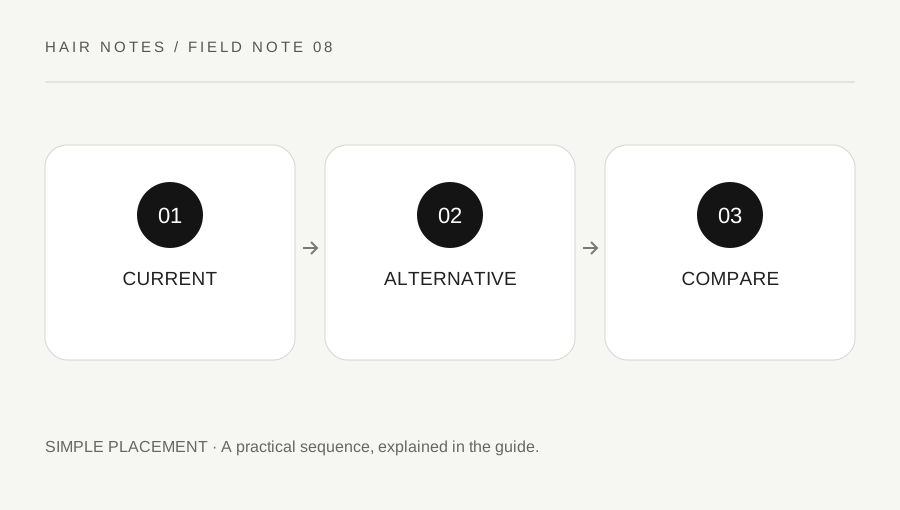
Original explanatory diagram. Examples illustrate a method or decision; they are not claims of personal testing.
Observe the existing fall
Look at the hair in its ordinary state and note where it separates naturally. A growth pattern or short layer can influence how another part behaves. Do not assume resistance means the hair needs stronger pulling or more product.
Use a suitable gentle detangling and sectioning method for your hair. Avoid scraping a pointed tool against the scalp. If the scalp is irritated or a style causes discomfort, stop and use appropriate advice rather than repeatedly manipulating the same area.
Move the division modestly
Try a small off-centre change before a much deeper side placement if that makes the comparison easier. Separate the hair gently and let it settle. The aim is seeing another arrangement, not creating an exact mathematical line.
Keep the rest of the styling as similar as practical so you can see the part's effect. If a section falls back, observe the pattern rather than fastening it under tension. You can decide that the existing part is more useful for the actual length and texture.
Compare from several ordinary views
Check front, side and overall fall in a mirror, and move your head normally. A still image can hide how the hair returns to its natural position. Consider glasses, collars and any accessory used during the day.
Do not use a rigid face-shape rule to decide that one part is mandatory. This guide offers an editorial placement experiment. Your preference, comfort and the actual behavior of the hair matter more than a universal label about which side everyone should choose.
Keep hold methods optional
If a small suitable clip helps a section stay comfortably while you compare, use it without forcing a large amount of hair into the mechanism. Remove it gently afterward. A part experiment does not require heat, chemical treatment or tight fastening.
If the proposed placement needs constant correction, keep that practical limitation in the decision. A photograph's outline may not be a useful all-day arrangement. Another modest part or the original placement can be a valid outcome.
Record a useful comparison
For a worked note, compare the current part with a small shift and then with a more visible side placement, keeping the same loose length. Note how the front sections fall and whether the arrangement remains manageable during ordinary movement.
Keep only a short preference note; there is no need to publish personal photographs. Do not claim the change treats hair loss or guarantees more volume. Persistent scalp or hair-loss concerns need appropriate professional assessment, while this original guide remains a reversible styling experiment.
Use a short comparison table with current placement, modest shift and deeper side placement as rows. Note actual fall, ordinary movement and interaction with glasses or collars. If one version requires a clip, include that accessory in the record rather than attributing the entire effect to the part alone. Keep photographs optional and private. Revisit the preferred version on another ordinary day before calling it dependable, since the hair's state can differ. The record should remain a personal styling observation, not a claim that a particular division changes growth or is required for a named face-shape category.
A practical checklist
Choices are saved in this browser. Reset them here or clear this site’s browser storage.
Questions that come up
Must I use a part based on face shape?
No universal rule is required here. Compare actual fall, comfort and preference rather than treating a category as a prescription.
Should I pull harder if the hair returns?
No. Observe the growth pattern and choose another comfortable placement if needed. Do not create tension to force the comparison.
Does changing a part treat hair loss?
This guide makes no treatment claim. Hair-loss or persistent scalp concerns need appropriate professional assessment.
References & scope
Background references checked on 18 October 2026. Worked examples and diagrams are original teaching material.